
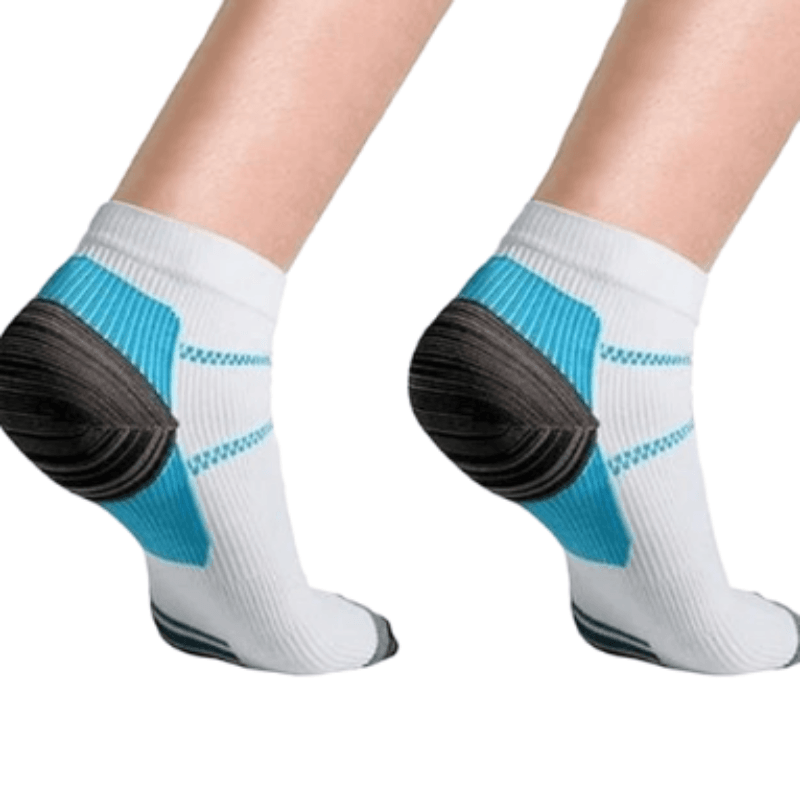
Quick answer: Compression level is the amount of squeeze a sock applies, usually quoted in mmHg. Among our best sellers, listings state 8-15 mmHg on our low-cut plantar fasciitis socks, 15-20 mmHg on three styles, and 20-30 mmHg on our sports stockings. Several listings, including our No. 1 copper 6-pack, do not state a number at all.
Compression socks are usually sorted by pressure, yet product pages handle that number very differently — some print it up front, some describe the squeeze in words instead. This guide sticks strictly to what our own listings state, so you know exactly which figure you are buying and where the gaps are.
What a compression level means
mmHg stands for millimeters of mercury, the unit used to state how much pressure a garment applies. A range such as 15-20 mmHg is the pressure band the sock is designed around, and a higher number means a firmer squeeze. That is all the number itself tells you — everything else comes down to the specific sock, the fit, and your own needs.
The levels our listings actually state
| 8-15 mmHg | Pain Relief Compression Socks for Plantar Fasciitis ($9.99–$24.99) — a low-cut pair whose listing describes plantar compression technology at 8-15 mmHg to improve blood flow, with targeted arch and heel zones. |
|---|---|
| 15-20 mmHg | 3 Pairs Compression Socks For Men ($19.99) — knee-length graduated compression the listing says boosts circulation and relieves leg pain, swelling and fatigue. The Copper-Infused Compression Socks (5-Pack) and the 6 Pairs Compression Running Ankle Support Socks state the same 15-20 mmHg range. |
| 20-30 mmHg | Running & Sports Compression Socks — Pack of 4 ($24.99) — the firmest stated level among our best sellers; the listing describes durable 20-30 mmHg sleeves with shock absorption to reduce fatigue and swelling. |
When the listing does not state a number
Our No. 1 seller, the 6 Pack Copper Compression Socks ($29.99, 436 orders since January 1, 2026), is described as graduated compression that puts pressure in the right areas to support, reduce fatigue, and prevent swelling — but no mmHg figure appears anywhere on the listing. The same is true of its sibling 6 Pairs pack, and our 3 Pairs Neuropathy Compression Socks promise gentle, targeted compression without naming a range. If you have been told to wear a specific level, that gap matters: choose a listing that states its number, or email info@plantarsocks.com and ask before ordering.
Three questions to pick your level
- Were you given a range? If a healthcare professional suggested a specific pressure, match it to a listing that states that figure — and confirm the choice with them, because we cannot advise on medical needs.
- What is the sock positioned for? Per the listings: the 8-15 mmHg pair is framed for everyday wear, sport, flight travel and nurses; the 15-20 mmHg styles for circulation support through work and activity; the 20-30 mmHg pack for long runs and demanding sessions.
- Gentle or defined? The listings that skip numbers lean on words like gentle and graduated. If you want a defined squeeze you can compare, stay with the stated ranges above.
Frequently asked questions
What does mmHg mean on compression socks?
mmHg stands for millimeters of mercury, the unit used to state how much pressure a garment applies. A range such as 15-20 mmHg is the pressure band the sock is designed around, and a higher number means a firmer squeeze.
Which Plantar Socks products state a compression level?
The Pain Relief Compression Socks for Plantar Fasciitis state 8-15 mmHg. The 3 Pairs Compression Socks For Men, the Copper-Infused Compression Socks 5-Pack and the 6 Pairs Compression Running Ankle Support Socks state 15-20 mmHg. The Running and Sports Compression Socks 4-pack states 20-30 mmHg.
What if a listing does not state an mmHg number?
Some of our listings, including the 6 Pack Copper Compression Socks, describe graduated compression without publishing a figure. If you need a specific pressure level, pick a product that states one, or email info@plantarsocks.com and ask before you order.
Is a higher compression level always better?
No. A higher number only means a firmer squeeze. Choose the level that matches what the listing positions the sock for, along with any guidance you have from a healthcare professional. More pressure is not automatically an upgrade.
Do compression levels differ by size within one product?
Each of our listings states a single range for the whole product, and none of our top listings publishes size-specific pressure figures. Sizing itself does vary by product, so check the size chart on each product page before ordering.
More sock guides
- Copper compression socks — guide to our No. 1 seller
- Compression socks for plantar fasciitis — how to choose
- Compression sock sizing guide — S/M, L/XL and S–XL explained
- Running socks vs compression socks — which do you need?
This article is general information, not medical advice — talk to a healthcare professional about your specific needs.
Prices and specifications are current as of publication and may change. See the product page for the latest details.