
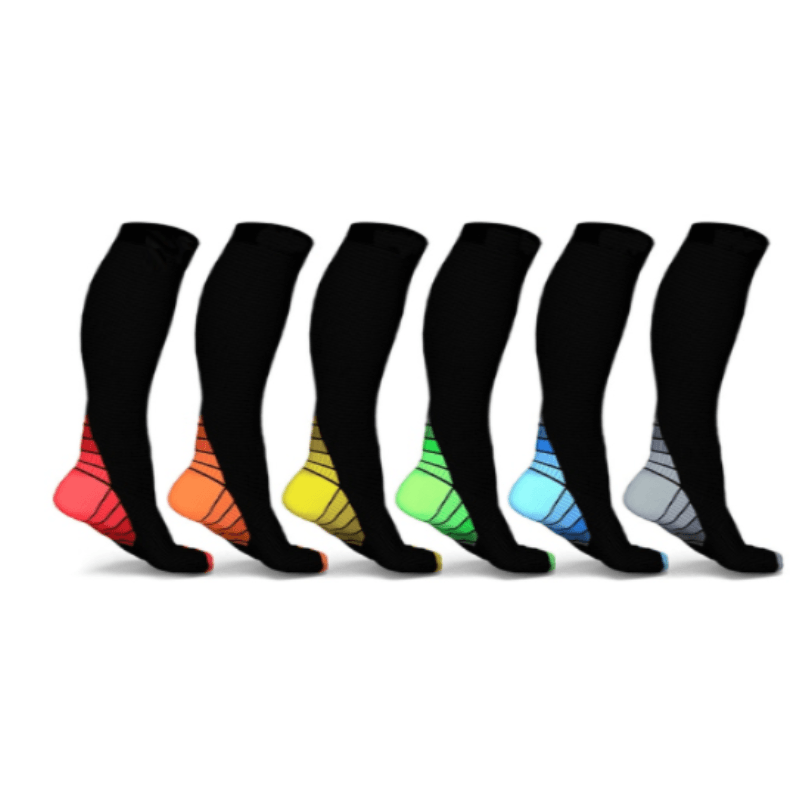
The simplest sock drawer system separates socks by the way you actually use them, keeps matching pairs together and retains any labels needed to identify a particular pair. Color alone is not enough when several socks look similar but have different sizes, materials or stated compression levels.
You do not need a set of custom dividers to begin. Empty one section of the drawer, sort what you have and choose a consistent place for each group. The useful result is being able to find the intended pair without guessing.
Identify before sorting
Start with clean, dry socks and make complete pairs. Check the packaging or garment markings where available. If you cannot confidently identify a pair that was prescribed or selected for a specific requirement, keep it separate and ask the relevant professional before treating it as interchangeable with another.
Do not infer a compression level from how tight a sock feels in your hand. Likewise, words such as “support” or “sports” do not establish that two different products serve the same purpose.
Plantar Socks carries a range including Multipack Unisex Sports Compression Socks. If you buy a multipack, retain its identification details so the pairs can be distinguished from other socks already in the drawer. This is an organization tip, not a recommendation about who should wear compression.
Choose a small number of useful groups
Use categories that match your own routine: everyday pairs, activity pairs and any specifically directed items, for example. If several people share the laundry, separate by owner before separating by use.
Keep the labels plain. “Alex—black work socks” is more useful than a complicated category name nobody remembers. A small card at the front of a drawer section can be enough.
Avoid sorting so finely that you abandon the system after the next wash. The point is to reduce decisions, not create a filing project every laundry day.
Keep complete pairs together gently
Lay matching socks together or use a folding method suitable for the garment. Follow the item's care instructions and avoid a storage method that unnecessarily stretches the openings.
Give unmatched socks a separate, small waiting area. Search for the missing partner during the next laundry cycle rather than mixing the single back into the drawer. If the pair never reunites, decide what to do with it instead of letting the waiting pile become permanent.
For socks that are easily confused, store the original product name or order reference in a phone note. A quick reference photo can help identify the design without keeping every cardboard sleeve forever.
Inspect while the drawer is empty
Look for obvious damage such as holes, loose seams or worn areas. Set questionable pairs aside rather than leaving them where you automatically reach for them. Product-specific questions about continued suitability should be answered from the maker's instructions or professional advice, not from a general drawer guide.
If you use a Sock Assist, keep it somewhere accessible according to its instructions. Do not bury an item you rely on underneath spare clothing.
Make the reset part of laundry day
Put each complete pair back into its group as soon as it is clean and fully dry. If someone else puts laundry away, show them the simple categories once and make the labels visible.
Review the system after a week. If you keep searching in the wrong place, move the groups rather than expecting yourself to remember an arrangement that does not suit your routine.
A useful sock drawer does not need to look perfect. It needs to keep the right pairs identifiable, make everyday choices easier and prevent superficially similar items from being treated as the same thing.
Related guide: How to Wash and Care for Compression Socks.